Selected Performance Projects


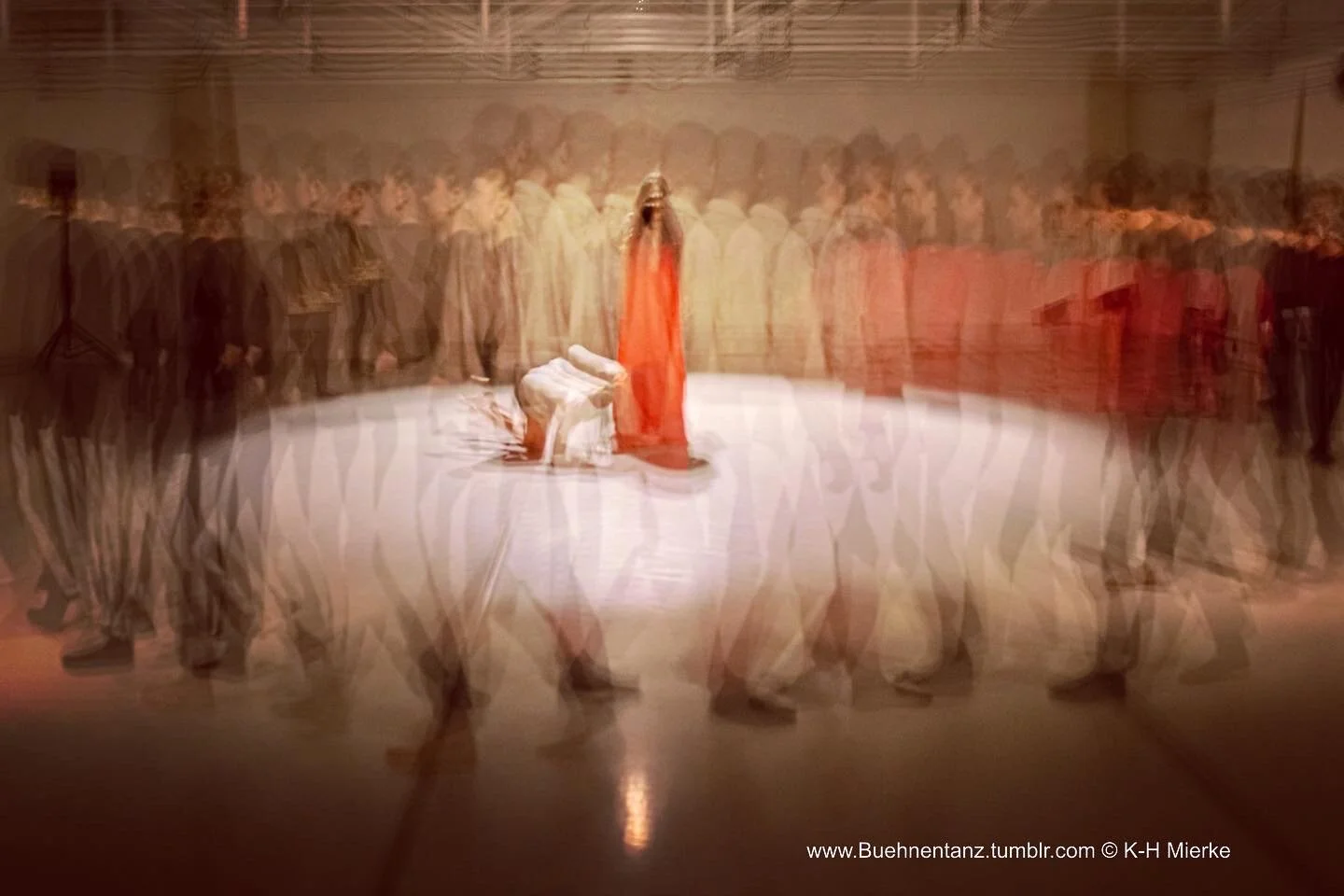

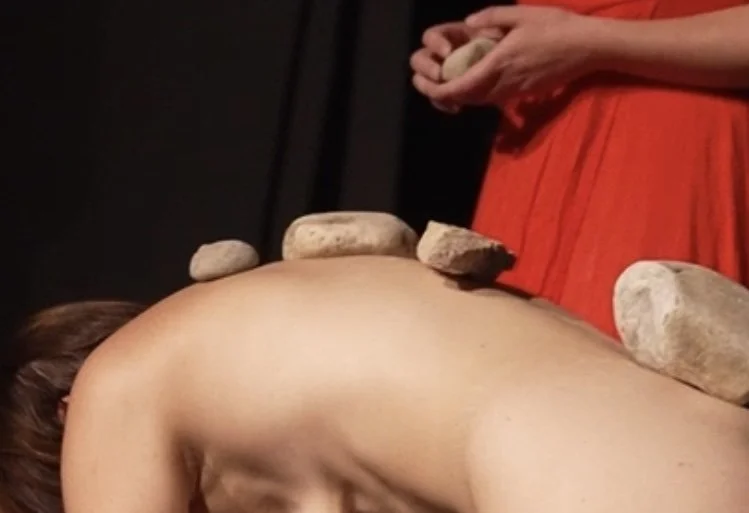
My performance practice is an evolving investigation into time as an embodied, relational, and ecological phenomenon. Through durational choreography, repetition, and site-specific exploration, I construct spaces where perception slows and transformation becomes perceptible. I understand the body as both an archive and a sensor of temporal experience—an instrument through which new relationships to time, trauma, and environment can emerge.
My artistic research originates in lived, embodied explorations of trauma and the body’s nonlinear experience of time. My early work sought to understand the temporal fracturing that occurs through trauma—how the body can hold multiple, simultaneous times, and how those fragmented temporalities might be re-integrated through movement. This inquiry led me to develop a choreographic language rooted in duration, repetition, and cyclical time, where the body’s intuitive intelligence functions as both the method and the material of the work.
Within this framework, time is not a neutral container but a somatic and psychological field—one that can be stretched, slowed, or ruptured. Through durational practice, I invite subtle shifts in perception that reveal how trauma reshapes the body’s internal sense of chronology. My performances become spaces of temporal reorganization, where intuition guides processes of reattunement, repair, and reorientation.
Each work functions as a living experiment in how the body can hold, release, and transform time. The performances unfold slowly, allowing both myself and the audience to witness the micro-shifts that emerge when time is extended beyond its habitual pace. Slowness and repetition are not aesthetic choices alone but tools for attention, endurance, and perceptual change.
My choreographic approach is grounded in somatic listening and intuitive process. I understand intuition not as instinct or impulse, but as a radical epistemology—an alternative way of knowing that resists rational, linear temporalities imposed by social and structural systems. Through this approach, I reclaim the traumatized body as a site of intelligence, agency, and transformation.
At the core of my practice is an ongoing dialogue with trauma and the body as a site of temporal rupture and repair. My work emerges from a desire to understand how trauma distorts the experience of time—how moments can fragment, loop, or suspend entirely within bodily memory. By working with repetition, duration, and somatic intuition, I use choreography as a means of re-integrating fractured temporalities.
Trusting the body’s innate intelligence and allowing intuition to guide movement positions embodied awareness as both method and resistance. Within this framework, listening to and trusting the traumatized body becomes an active, political gesture—one that insists on presence, complexity, and the possibility of transformation through time.